

HISTORY
Ajijic’s story begins long before the Spanish conquest, when tribes descended from the Nahuatl settled on the shores of Lake Chapala. It is said that the first Nahuatl Indian arose from ashes on Mezcala Island, and it is because of this event that the Lake is one of the 4 cardinal points in Nahuatl mythology.
In the Nahuatl language, Axixic means “Place where water sprouts” or ¨Place where water splashes”.
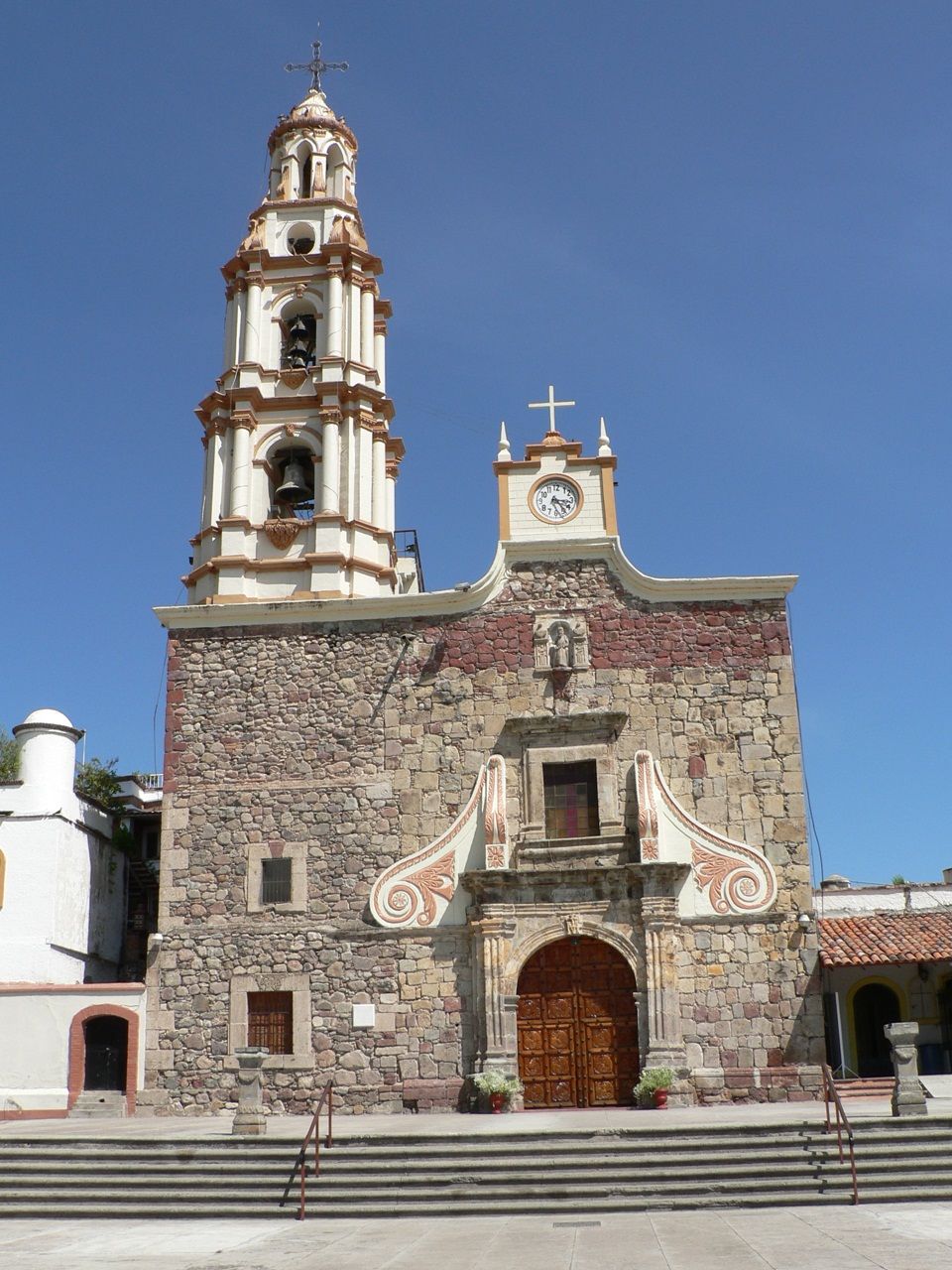
Ajijic, as a Spanish settlement, was founded in 1531 and is one of the oldest villages in Mexico. The conquest of this area, then known as Mar Chapalteco, was in the hands of the knight Alonso Dávalos, and at the same time the conversion of the natives to Christianity by Father Fray Martín de Jesús, who here established the second oldest convent in the west of New Spain, in honor of San Francisco de Asís, which years later changed, giving the convent the name of San Andrés de Axixic, who is our patron saint until today.
The cobblestone streets, the parish church, the chapel and the few residences date back to the Spanish influence, but it was not until 1930 to 1940 that this fishing village became a magnet for foreigners, one of the first being Miss. Ayenara Zara Alexeyewa, affectionately nicknamed ¨La Rusa¨, who was a famous interpreter of Russian classical ballet, made Ajijic her permanent residence, along with others who followed in her footsteps. Because she dedicated her life to Ajijic and La Ribera, we named our prestigious restaurant “La Rusa” after her.
ART
Ajijic Cradle of artists, where the plastic has had great auge after a remembered workshop of painting in the 60’s, was the foreigner Neill James, who congregated different children inducing them to the painting, children who when growing up became great artists, but who have had the commitment to create more workshops of painting.
Thus the history of Ajijic’s plastic art was born and spread, until in recent years is no longer enough canvases in easel, nor the quoted exhibition rooms, in Ajijic art is in the streets, in its walls, and in the facades of houses.
Many of the streets of Ajijic, in its neighborhoods and sectors, you can find at least one mural, a sample of the art of one of the neighbors, or one of the renowned artists who have had the desire to endow a certain wall to turn it into a work of art.
In the center of the village you can see many of them, in schools, in the delegation, in the art walk, painted by renowned artists such as Bruno Mariscal, José Durán, Efrén Gonzales, López Vega, Javier Zaragoza, among others, but in the interior of the village others stand out, some new artists, some who venture into painting and achieve admirable creations.
Innumerable shops, taqueras, clothing shops, craft shops and restaurants have preferred to embed a mural in its facade as opposed to a typical conventional facade.
In the main streets there will be dozens of them, as well as in the interior of the village, and they are part of the cultural growth of Ajijic, they reflect the history of the village and also the present, they are the sample of the importance of the plastic and of the arts in Ajijic but more than that, they are the sample of the beauty of the village of Ajijic.
TRADITIONS
In the first months of the year, the activity concerning the point in question is a little calm, since in January there is only one festivity, the San Sebastian Day, carried out on the 20th of the month already mentioned, is a simple celebration in just one Ajijic neighbourhood, which is accompanied by fireworks, a band and a procession to the temple.
The following tradition is celebrated in February when the “carnival” is celebrated is somewhat different from other localities, since for approximately nine days there is a parade in which “sayacas” are people disguised as “voluptuous women” and with ugly-looking masks that are accompanied by bags of flour which throw people generally children and young people who provoke them, the route of this parade ends in the Lienzo Charro Ajijic, in which it concludes with a bullfight and musical groups both northern and band.
The following tradition is the so-called passion of Christ, carried out in Holy Week, is divided into several stages, begins with “Palm Sunday” in which the main square is decorated with bouquets made of palm leaf and flowers, in addition to people can buy or make their bouquet of the same materials and exhibit them to go around the square. It continues with the dramatization of the capture of Christ carried out also in the main square and temple, with this the next stage is given that is the dramatization of the viacrucis carried out the denominated Good Friday, consists of a route along the main streets of Ajijic and to climb to the mountains to make the dramatization of the crucifixion, after this that same day in the night the denominated “March of the silence” is made it is a route by main streets in which the light is diminished to the maximum and the people pay commands that they made.
Something that has become very popular in Ajijic is the celebration of the day of the child, as traders, associations and American society join together to make a festival to children where they are given toys and some food.
The 3rd of May is celebrated the day of the Cross, in which people decorate the crosses with offerings such as prepared food, fruit, drinks, music and a gift for visitors, the tradition on this day is called “raising the cross”, ie, keep all the offerings that has the cross but you have the following year’s order to put the same amount of offerings and increase them.
In September as elsewhere is a month with many festivities and of course is for September 6, in Ajijic begins with anticipation, in the last weeks of August are presented the candidates for queens of the national holidays, they will have the task of raising funds for the realization of the cry of independence. The Saturday before the 16th of September the “Regata de Globos” (Balloon Regatta) takes place in which all the neighbourhoods of Ajijic as well as guests from other sides participate in the creation and elevation of singing balloons, made with Chinese paper. At the end of this event the coronation of the Queen of the Patriotic Feasts takes place. On the 15th of September in the main square the independence cry is made and then a popular verbena with band takes place.
The next celebration is the Celebration of the Virgin of the Rosary, which falls into the same, a popular verbena with band, fireworks, drink stalls, food and so on.
On the 1st and 2nd of November there is the celebration of the day of the dead, the first as traditionally known by the people, “the day of the little angels” and the 2nd “the day of the dead” both days is the tradition to bring offerings to their deceased, as well as to go to eat them with them in the pantheon, many are accustomed to bring music such as band, mariachi, norteño and the traditional crosses of the dead, which are crosses adorned with flowers. On November 2 there is an exhibition of altars of the dead, lapidas and sawdust rugs, as well as a parade of catrinas in which people disguised as catrina dance, jump and shout in celebration of the dead.
In this same month are the patron saint festivals, are nine days in which the most popular guilds of Ajijic come together to celebrate the patron saint, during the nine days you will find fireworks, music, food stalls, drink, souvenirs, etc., as well as mechanical games.
To finish the most common traditions of Ajijic on December 12 is celebrated to the Virgin of Guadalupe.

join777login
on said
Getting started here was a breeze since I already knew how the process works from previous reviews online. The login portal is secure and I love that I can switch between my profile and the live dealer games without any annoying pop ups. My first weekend here was genuinely fun. join777login
Maureen1430
on said
https://addlinks.pro/Q1pIL
vn24win
on said
Super impressed with the customer service. They answered my questions in minutes and the registration process was a breeze. Give vn24win a try.
jl44
on said
Found a wonderful place to relax and enjoy some top tier entertainment. The app runs flawlessly on my phone and withdrawals are processed faster than expected. It feels like the developers really listen to what players want. Will definitely keep coming back. jl44
Atticus2024
on said
https://addlinks.pro/HgZIx